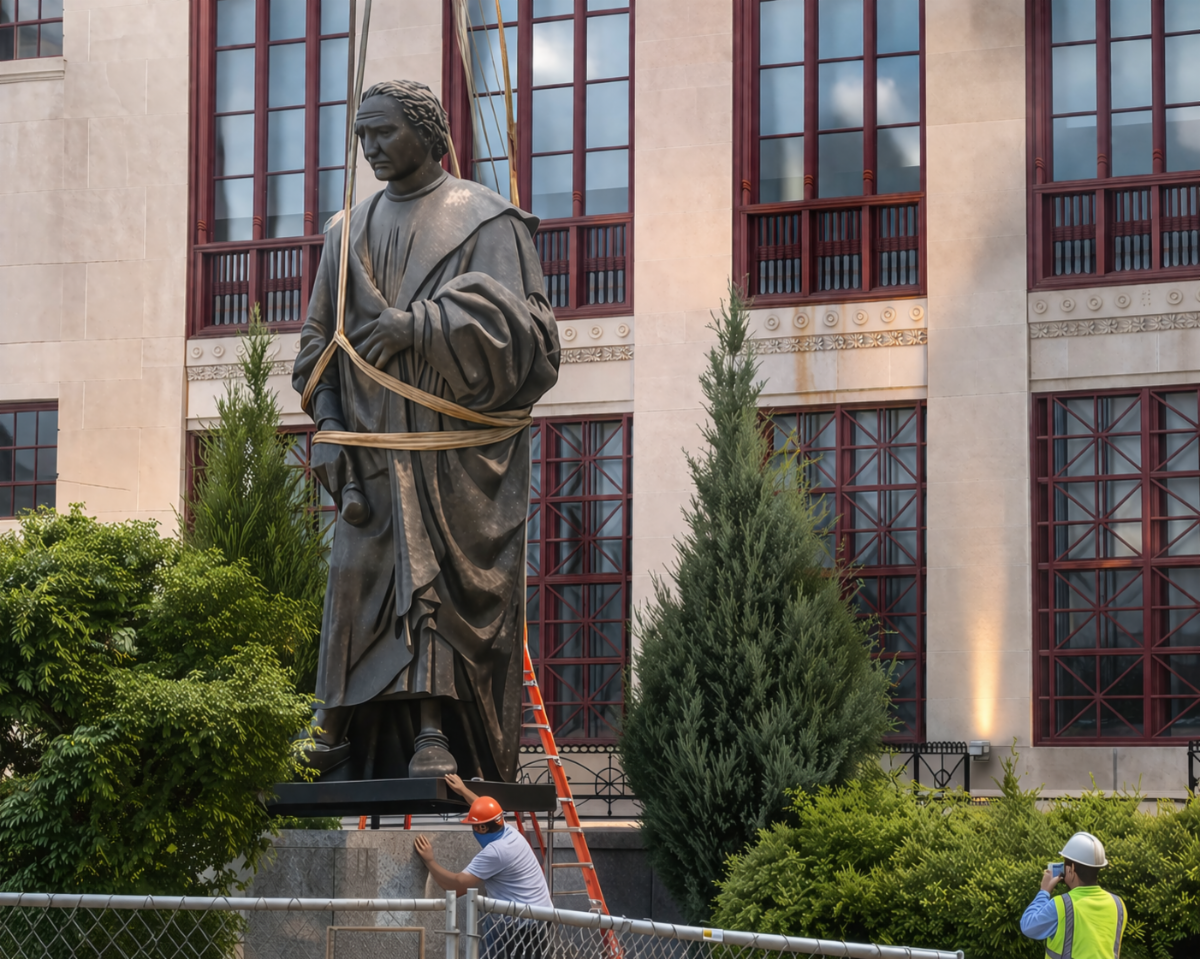
“Six years ago, in a rushed and inconsistent response to unrest, city leaders removed the Columbus statue but not the name of the city itself,” said COPOMIAO President Basil Russo. “Columbus Day emerged in the aftermath of the 1891 New Orleans lynching, when 11 Italian immigrants were killed by a mob of thousands, an event that prompted a national effort to promote the acceptance of Italian Americans. That legacy continues to shape the meaning and importance of these monuments today.”
Read about the historical origins of Columbus Day here.
Cast by renowned Italian sculptor Edoardo Alfieri in Genoa, Italy, the 20-foot bronze statue was unveiled in 1955 before 100,000 people. Its dedication marked the beginning of a formal sister-city relationship between Genoa and Columbus, Ohio, rooted in cultural and commercial exchange.
COPOMIAO’s Pro-Columbus Legal Momentum
COPOMIAO won back-to-back unanimous rulings in Pennsylvania’s Commonwealth Court, blocking the removal of Pittsburgh’s Columbus statue in 2024 and restoring Columbus Day as a citywide holiday in Philadelphia in 2025.
As part of its ongoing bipartisan advocacy efforts, COPOMIAO worked with the Trump Administration this past March to install Baltimore’s toppled Columbus statue on White House grounds — a collaboration that made international headlines.
“Public monuments cannot be removed at the unilateral discretion of elected officials, without process, authority or regard for binding agreements. Courts exist to check that kind of overreach,” said Bochetto. | 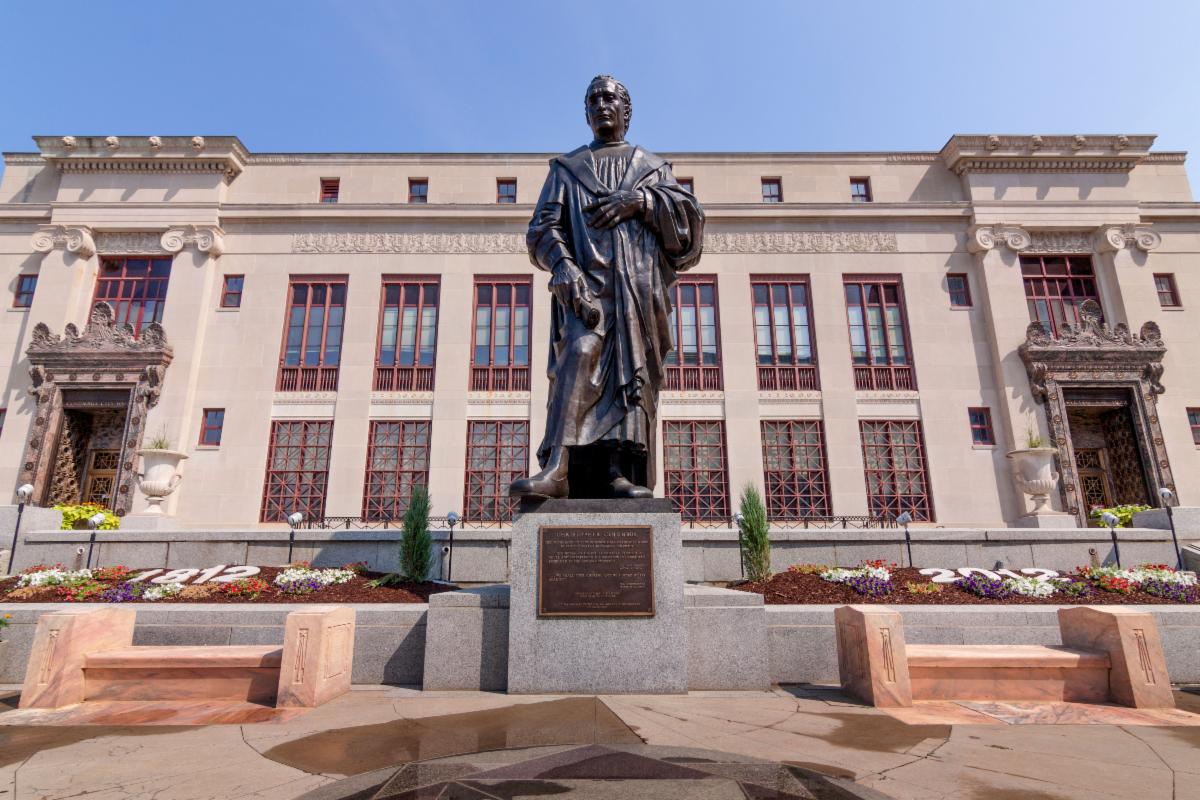
No comments:
Post a Comment