Sunday, July 19, 2026
Sunday, July 12, 2026
Friday, July 10, 2026
NYC 'Little Italy' To Be Back On Map, But . . .

“We are grateful that Mayor Mamdani and the New York City Mayor’s Office of Immigrant Affairs listened to the concerns of the Italian American community and corrected the omission of Little Italy from the Immigrant Enclaves map,” said CSJ President John A. Fratta. “Little Italy is a historic and enduring symbol of the Italian immigrant experience in New York City, and its inclusion ensures that the contributions of generations of Italian immigrants and Italian Americans are properly recognized.”
“However, we remain disappointed that this correction came only after significant pushback and that other historic and thriving Italian American communities continue to be excluded from the map,” Fratta continued. “Neighborhoods such as Arthur Avenue in the Bronx represent vibrant Italian American enclaves with deep cultural, economic, and historical significance. These communities continue to preserve Italian heritage, support local businesses, and contribute immensely to the diverse fabric of New York City.”
The CSJ believes that maps and public representations of New York City’s immigrant communities should accurately reflect the full scope of the neighborhoods that have been shaped by generations of immigrants. Recognizing one community while overlooking others diminishes the important role these enclaves have played in building and enriching the city.
“The Italian American community appreciates the Mayor’s willingness to address this concern, but our work is not complete,” Fratta said. “We encourage Mayor Mamdani and MOIA to continue engaging with community leaders and to ensure that all significant immigrant enclaves—including those that represent the Italian American experience—receive appropriate recognition.”
The CSJ remains committed to advocating for accurate representation of Italian American history, culture, and contributions, and will continue working with community organizations and government leaders to promote a more complete and inclusive understanding of New York City’s diverse immigrant communities.
Little Italy To Mamdani: 'Te Ne Pentirai!'
From The Free Press:

Tuesday, June 30, 2026
Revealed: The Italian Hand In America's Founding!
 Before America had a Constitution, it needed words, ideas, and a vision of what a republic could look like.
 Filippo Mazzei lived next door to Thomas Jefferson in Virginia, and the two men spent years exchanging ideas about liberty and government. Mazzei's own writing, "all men are by nature equally free and independent," is widely credited as the inspiration behind Jefferson's "all men are created equal" in the Declaration of Independence.
While Mazzei gave the founders their words, Gaetano Filangieri gave them a framework. His major work, "The Science of Legislation," reached Benjamin Franklin directly, and his ideas on law and government shaped political thought during the founding era.
Andrea Palladio never set foot in America. He lived two centuries before the Revolution. But his classical architectural style became the visual language of the young republic. Jefferson studied his work closely, and that influence can still be seen in Monticello, the University of Virginia, and the federal buildings that define American government today.
Words, ideas, and vision. Italians and Italian Americans helped shape this nation from its very first chapter.
The National Italian American Foundation (NIAF) is a proud Supporting Partner of America250 honoring the generations of Italians and Italian Americans who have shaped our nation.
Monday, June 29, 2026
Yeah, We Discovered, LOVE and Treasure America!

Celebrate 250 years of America with the Italians who discovered it.
Monday, June 22, 2026

Thursday, June 18, 2026
A Little-Known Chapter From 1776

From the Italian Sons and Daughters of America:
Sunday, May 17, 2026
A Rich Italian American Tradition: Great Food, Too!
Philadelphia's Italian Market Festival held today in Philly's original "Little Italy" neighborhood was an astounding success, drawing huge crowds amidst bright, sunny weather.
As always, the highlight of the two-day festival was the beautiful Procession of the Saints. The procession starts at Saint Mary Magdalen de Pazzi Church (712 Montrose Street) and pauses at 9th and Washington Avenue for the Blessing of the Market, before concluding at Saint Paul Catholic Church at the corner of South Hutchinson and Christian Streets.
The pinning of money to ribbons dangling from the statues seems to have origins in the practice of many new immigrants, who, to be remembered and as a declaration of their newfound prosperity, sent money back home to be visibly displayed on the statue of the community’s patron Saint, in the church and in processions. Today, many devotees simply make a prayer and pin money as an offering in support of the religious institution that is fostering their spiritual belief and needs.
The procession pauses from time to time to give blessings by sprinkling Holy Water, a ritual tradition for expiatory and purificatory purposes attributed to the Apostle St. Matthew, which recalls the baptismal rite that spiritually bound the community together.
We hope you enjoy the photos we took during this marvelous procession which winds its way through a neighborhood rich in Italian American history.


Monday, April 27, 2026
Another Amazing Italian American Success Story!
The National Italian American Foundation's (NIAF) New York Gala was honored to welcome the oldest living former U.S. Representative, the Hon. Frank Guarini, 101!
Back in the 80's and 90's, he served as NIAF's President, Chairman, and on its Board of Directors, working tirelessly to preserve the Italian language, fund scholarships, and remind the world of what our community has contributed to this nation.
Congressman Guarini, thank you for a lifetime of service to this community and this country!

Sunday, April 26, 2026
Tuesday, April 7, 2026
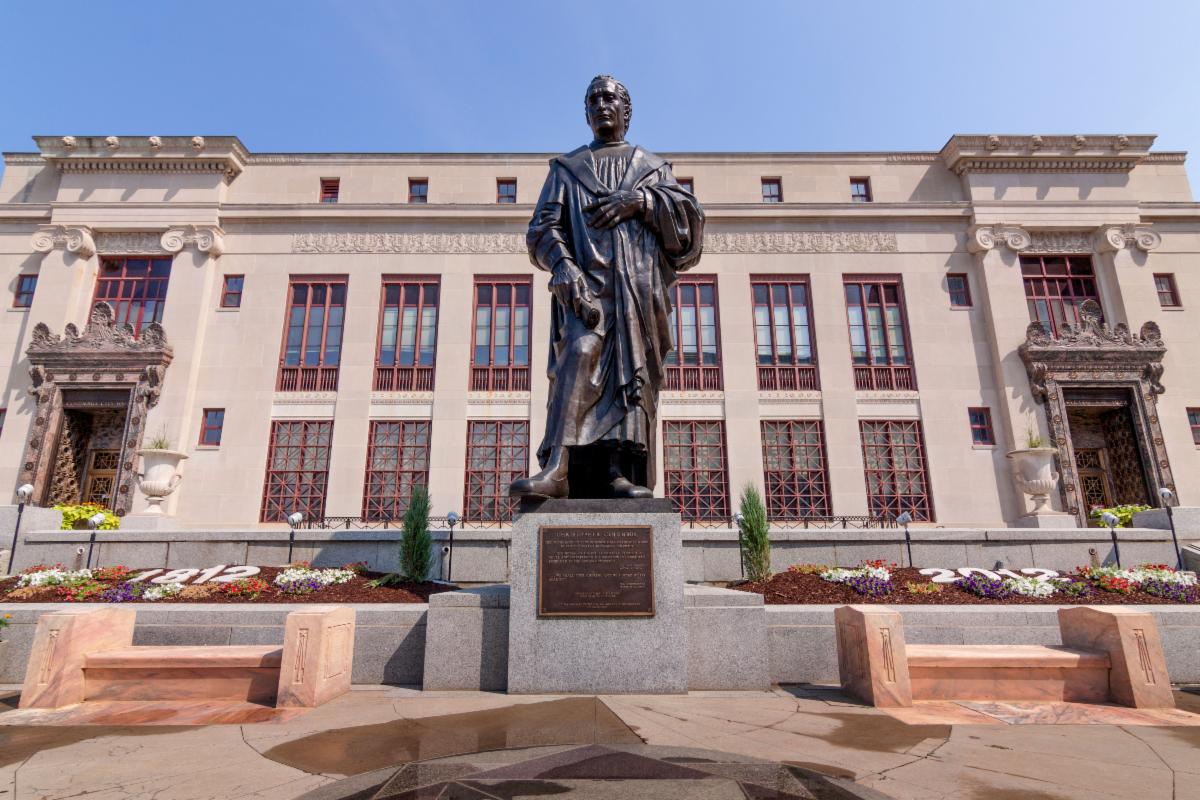
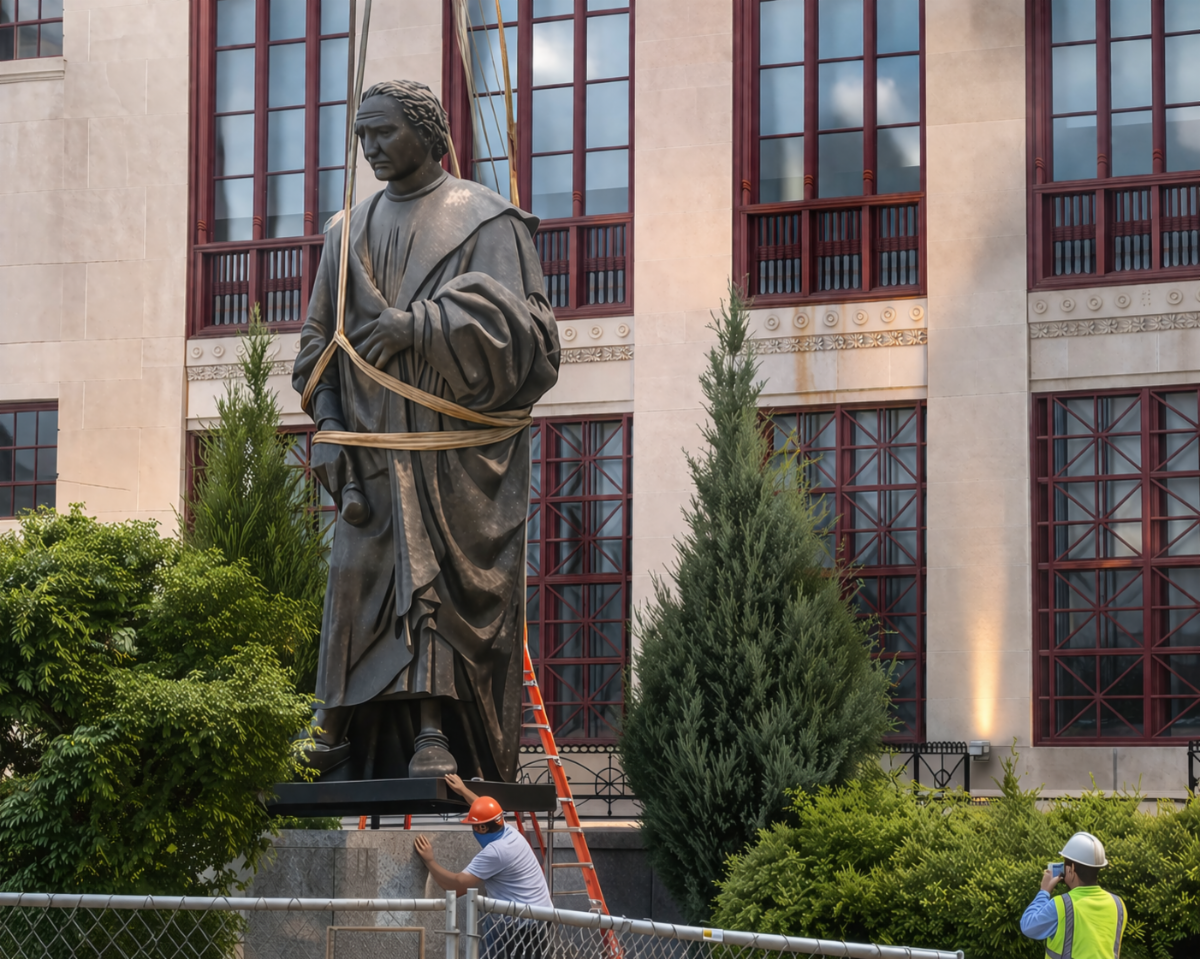
BRAVO! This Is A Battle Worth Winning!
|
|
|
|
|
|
|
Saturday, April 4, 2026
And Now, Buona Pasqua E Tutti!

May your day be filled with peace, joy, la famiglia and the blessings of this season of renewal and rejoicing.
This is a day to proclaim salvation and to give thanks for our faith; regaling in the hope of eternal life, the promise of the Trinity.
In Italy, Easter remains a day that celebrates life. And no group of people celebrates life as well as the Italians.
Although Italians do not decorate hard–boiled eggs nor have chocolate bunnies or pastel marshmallow chicks, the biggest Easter displays in bars, pastry shops, supermarkets, and especially at chocolatiers are brightly wrapped uova di Pasqua—chocolate Easter eggs—in sizes that range from 10 grams (1/3 ounce) to 8 kilos (nearly 18 pounds).
Most of them are made of milk chocolate in a mid–range, 10–ounce size by industrial chocolate makers.
Some producers distinguish between their chocolate eggs for children (sales numbers are a closely guarded secret, but the market for these standard quality eggs is said to be shrinking with Italy's birthrate) and expensive "adult" versions. All except the tiniest eggs contain a surprise. Grown–ups often find their eggs contain little silver picture frames or gold–dipped costume jewelry.
The very best eggs are handmade by artisans of chocolate, who offer the service of inserting a surprise supplied by the purchaser. Car keys, engagement rings, and watches are some of the high–end gifts that have been tucked into Italian chocolate eggs in Italy.
Our favorite Easter treats: chocolate coconut cream eggs (sinfully sweet), chocolate covered marshmallows, jelly beans of every color and flavor, sweet Italian Easter bread, hot cross buns and Peeps. Well, they used to be out favorite Easter treats but since we went low carb they are consumed in moderation if at all. Oh, well . . . .
Sunday, March 29, 2026
Is This Italian Food Mecca Headed Our Way?
This festival of Italian food has one all-pervading moto: Mangia bene, which simply means eat good!
And if you're at Uncle Giuseppi's, you're eating good from the moment you walk into one of its capacious Italian supermarkets. Yes, we did say supermarkets, because Giuseppi's stores now encompass up to 55,000 square feet and they are filled with every sumptuous Italian dish, delicacy and dolcé you could possibly think of and you'll be sampling the food as soon as you arrive.
In 2001, Giuseppi's opened in East Meadow, Long Island, NY, and they've been growing ever since. Now, 25 years later, they have a dozen stores (known as Marketplaces) with several more on the way. And here's the most intriguing part: scuttlebutt has it that Uncle Giuseppe’s Marketplace may have plans to open in the Cherry Hill area, which would be the company's first foray into the South Jersey/Philadelphia region.
Well, we're so excited by all this that we took a ride up to the Giusepp'is location nearest us in Tinton Falls, NJ and were absolutely delighted with what we found. In fact, in every department and every aspect of the store, Uncle Giuseppi's exceeded our expectations -- and we're very discriminating customers.
The shopping experience at Uncle Giuseppe’s Marketplace is designed to mirror the way our grandparents used to shop—but on a much bigger scale, of course. Giuseppi's makes many of their products from scratch—their own pasta, mozzarella, lasagna, sausage, baked goods, pastries, and lots more. And the store is divided into shops where you can watch the food being prepared. Then, you can purchase a prepared food item, take it home, heat it up and—dinner's ready! Plus, Giuseppi's has combined this with a full-service supermarket to give you a total food shopping experience at the best value, where you can buy all of your weekly groceries at competitive prices.
And Giuseppi's staff is large, knowledgeable, helpful, and friendly. The whole idea is that food shopping should be a pleasant experience.
Enjoy these photos from our visit and take a look at the marvelous culinary creations in Giuseppi's various departments including pastas, cheeses, pizza, breads, pastries, sandwiches
and prepared foods. The place is gastronomic heaven. Pray that it's headed our way!


Thursday, March 19, 2026

Monday, February 23, 2026

Thursday, January 15, 2026
Saturday, January 3, 2026
ONLY In Italy: The Mirth And Magic Of La Befana!

From our friends at Tutto Italiano:

 In Italy, the holidays don’t truly end on December 25. They end when La Befana arrives.