Showing posts with label Italiana. Show all posts

Friday, October 30, 2026

Italian American Heritage Month: Frank Stella

Frank Stella is an Italian American painter and printmaker, whose work is recognized in the “post-painterly abstraction” art movement. His early works showcase many elements of minimalism, which is why he is also considered by some as a minimalist, although most of his later artworks do not strictly follow minimalism. 

He is best known for his use of geometric patterns and shapes in creating both paintings and sculptures. Stella is arguably one of the most influential living American artists: his works utilize the formal properties of shape, color, and composition to explore non-literary narratives.

Born on May 12, 1936, in Malden, MA, Stella went on to study history at Princeton University before moving to New York in 1958. Having moved to the city, Stella was immersed in the heyday Abstract Expressionism, but it was the work of Jasper Johns that inspired Stella’s Black Paintings of 1958-1960.

Stella’s art was recognized for its innovations before he was twenty-five. In 1959, several of his paintings were included in Three Young Americans at the Allen Memorial Art Museum at Oberlin College, as well as in Sixteen Americans at the Museum of Modern Art in New York (1959–60). Stella joined dealer Leo Castelli’s stable of artists in 1959. In his early series, including the Black Paintings (1958–60), Aluminum Paintings (1960), and Copper Paintings (1960–61), Stella cast aside illusionistic space for the physicality of the flat surface and deviated from the traditional rectangular-shaped canvas.

Today, Stella’s works are held in the collections of the Metropolitan Museum of Art in New York, the Kunstmuseum Basel, the Art Institute of Chicago, the National Gallery of Art in Washington, D.C., and the Tate Gallery in London, among others.

Thursday, March 19, 2026

The True Meaning Of March 19 - St. Joseph's Day

March 19 is a special day in Italy and throughout the world. It's St. Joseph's Day.

St. Joseph's Day is a big Feast Day for Italians because it also marks Father's Day. Beyond that, Italians believe that in the Middle Ages, God, through St. Joseph's intercessions, Sicilians were saved from a very serious drought. So in his honor, the custom is for all to wear red, in the same way that green is worn on St. Patrick's Day.

On St. Joseph's Day, after Mass (at least in parishes with large Italian populations), a big altar ("la tavola di San Giuse" or "St. Joseph's Table") is laden with food contributed by everyone (note that all these St. Joseph celebrations might take place on the nearest, most convenient weekend). Different Italian regions celebrate this day differently, but all involve special meatless foods: minestrone, pasta with breadcrumbs (the breadcrumbs symbolize the sawdust that would have covered St. Joseph's floor), seafood, Sfinge di San Giuseppe, and, always, fava beans, which are considered "lucky" because during the drought, the fava thrived while other crops failed (recipes below).

The table -- which is always blessed by a priest -- will be in three tiers, symbolizing the Most Holy Trinity. The top tier will hold a statue of St. Joseph surrounded by flowers and greenery. The other tiers might hold, in addition to the food: flowers (especially lilies); candles; figurines and symbolic breads and pastries shaped like a monstrance, chalices, fishes, doves, baskets, St. Joseph's staff, lilies, the Sacred and Immaculate Hearts, carpentry tools, etc.; 12 fishes symbolizing the 12 Apostles; wine symbolizing the miracle at Cana; pineapple symbolizing hospitality; lemons for "luck"; bread and wine (symbolizing the Last Supper); and pictures of the dead. There will also be a basket in which the faithful place prayer petitions.

The cry "Viva la tavola di San Giuse!" begins the feasting and is heard throughout the day. When the eating is done, the St. Joseph's altar is smashed, and then three children dressed as the Holy Family will knock on three doors, asking for shelter. They will be refused at the first two, and welcomed at the third, in memory of the Holy Family's seeking of hospitality just before Christ was born. This re-enactment is called "Tupa Tupa," meaning "Knock Knock."

The day ends with each participant taking home a bag that might be filled with bread, fruit, pastries, cookies, a medal of St. Joseph, a Holy Card and/or a blessed fava bean. Keep your "lucky bean," and let it remind you to pray to St. Joseph.

Sunday, February 8, 2026

Italian Skater Wins Olympic Gold; Treasures Son!

Wednesday, October 1, 2025

Welcome ITALIAN AMERICAN HERITAGE MONTH!

Italian American Heritage Month, celebrated each October, is a time to reflect on and honor the rich cultural legacy, enduring spirit, and invaluable contributions of Italian Americans to the United States. From the earliest days of American history to the present, Italian Americans have left an indelible mark on every facet of American life—arts, science, politics, business, and beyond. Their journey, often marked by hardship and resilience, has ultimately been one of extraordinary achievement and deep cultural enrichment.

The mass immigration of Italians to the United States began in earnest in the late 19th and early 20th centuries. Fleeing poverty and political turmoil, millions of Italians arrived in search of opportunity, many settling in urban centers such as New York, Boston, Chicago, and Philadelphia. Despite facing discrimination and hardship, they built tight-knit communities, preserved cultural traditions, and embraced the American dream through hard work and determination. The legacy of that immigrant spirit still resonates today.

Of course, our legacy even predates the great migration. Christopher Columbus (whose birthday is celebrated on October 13) discovered the Americas and our nation itself is named after Americus Vespucci, a great explorer. And let's not forget that Giovanni da Verrazzano entered New York harbor in 1524, 80 years before Hudson. Likewise, the renowned English explorer John Cabot (actually Giovanni Caboto, a native of Genoa Italy) was of Italian descent. We were even instrumental in the very founding of our nation. Phillip Mazzei was an early American revolutionary whose ideas and writings greatly influenced Thomas Jefferson and had an impact on Jefferson's own draft constitution of 1783. 

But now, let's move up to more recent times as we have made our mark in every sphere of life and every aspect of our American nation. 

Italian Americans have had a profound influence on American arts and entertainment. Frank Sinatra, born to Italian immigrant parents in New Jersey, became one of the most iconic singers and entertainers of the 20th century. His music helped define the American soundscape and his legacy continues to inspire artists across genres.

In film, directors such as Martin Scorsese have transformed American cinema. Known for classics like Goodfellas, Taxi Driver, and The Departed, Scorsese’s work has not only won critical acclaim but also explored the complexities of identity, morality, and the immigrant experience in America.

In literature, authors like Don DeLillo and Gay Talese have enriched American letters with powerful narratives and masterful prose, often shaped by their Italian American heritage. And Lisa Scottoline is best-selling novelist.

Science, Technology, and Business

Italian Americans have also made significant strides in science and innovation. Physicist Enrico Fermi, who emigrated to the U.S. in the 1930s, played a pivotal role in the development of nuclear energy and was instrumental in the Manhattan Project. His work earned him the Nobel Prize in Physics and cemented his place in history as one of the fathers of modern physics.

In business, entrepreneurs such as Amadeo Giannini, the founder of Bank of America, revolutionized banking by making credit accessible to immigrants and working-class Americans, helping to democratize finance in the 20th century.

Politics and Public Service

Italian Americans have also risen to prominent roles in government and public service. Geraldine Ferraro, the first woman—and Italian American—to run for Vice President on a major party ticket in 1984, broke new ground in American politics and inspired generations of women to pursue leadership roles. 

Currently, Pam Bindi serves as US Attorney General, Steve Scalise is the US House Majority Leader and they owe a great debt of gratitude to Italian-American trailblazer Fiorello La Guardia, A Republican-turned-Fusion-Party-member who was a three-term Mayor of New York City in the 1930s and '40s. He is remembered as an anti-corruption reformer. 

Cultural Traditions and Community Values

Beyond individual achievements, Italian Americans have enriched the cultural and social fabric of the United States through their deep sense of family, tradition, and community. Festivals like the Feast of San Gennaro in New York’s Little Italy, or Columbus Day celebrations across the country (while evolving in their symbolism and significance), reflect the enduring pride of Italian American communities.

Cuisine is another area where Italian culture has deeply permeated American life. From pizza and pasta to more regional dishes brought by immigrants from Sicily, Naples, and Tuscany, Italian cuisine is now an integral part of American culinary identity.

A Continuing Story

Today, more than 17 million Americans identify as having Italian ancestry, and their contributions continue to grow and evolve. In sports, players like Joe DiMaggio, Vince Lombardi, and more recently, NFL coach Nick Sirianni, have become household names. In the arts, actors like Robert De Niro, Marisa Tomei, and Lady Gaga carry forward a tradition of creative excellence.

Italian Americans have profoundly shaped the United States through their contributions in every field imaginable. Their story is one of perseverance, passion, creativity, and commitment to the American ideal. Italian American Heritage Month offers an opportunity not only to celebrate these achievements, but also to reflect on the ways in which immigrant communities continue to enrich our shared national life. As we honor the past, we also look ahead to the ongoing contributions of Italian Americans to America’s vibrant future.

Here is a more detailed list of some of the more noteworthy personalities of Italian descent:

Politics & Public Service

  • Fiorello La Guardia – Beloved mayor of New York City (1934–1945), known for reform and strong leadership.

  • Geraldine Ferraro – First woman and Italian American nominated for Vice President (1984).

  • Rudy Giuliani – Former mayor of New York City, known for leadership after 9/11.

  • Andrew Cuomo – Former Governor of New York; son of Mario Cuomo, also a prominent governor.

  • Antonin Scalia – First Italian American U.S. Supreme Court Justice.

  • Samuel Alito: U. S. Supreme Court Justice.

Arts, Film & Entertainment
  • Frank Sinatra – Iconic singer and actor; one of the most influential musical artists of the 20th century.

  • Dean Martin – Legendary crooner and member of the "Rat Pack."

  • Martin Scorsese – Academy Award-winning director of Goodfellas, The Irishman, and The Departed.

  • Robert De Niro – Acclaimed actor known for iconic roles in Raging Bull, Taxi Driver, and The Godfather Part II.

  • Al Pacino – Legendary actor known for The Godfather trilogy, Scarface, and Scent of a Woman.

  • Lady Gaga (Stefani Germanotta) – Grammy and Oscar-winning pop icon, actress, and philanthropist.

  • Marisa Tomei – Academy Award-winning actress (My Cousin Vinny).

  • Jon Bon Jovi – Rock musician and frontman of Bon Jovi.

  • Leonardo DiCaprio – Although of mixed heritage, his Italian roots are part of his identity; acclaimed actor and environmental activist.

Literature & Journalism

  • Don DeLillo – Influential novelist known for White Noise and Underworld.

  • Gay Talese – Groundbreaking journalist and non-fiction writer, contributor to the “New Journalism” movement.

  • Mario Puzo – Author of The Godfather novel, which became the basis for the famous film series.

Science & Innovation

  • Enrico Fermi – Physicist and Nobel laureate; key figure in the development of nuclear power and the atomic bomb.

  • Ettore Majorana – Theoretical physicist with significant contributions to quantum mechanics (noted more in Italian history but influential globally).

  • Anthony Fauci – Noted again here for his contributions to medical science and public health.

Business & Entrepreneurship

  • Amadeo Giannini – Founder of Bank of America; revolutionized modern banking.

  • Richard Grasso – Former chairman and CEO of the New York Stock Exchange.

  • Mario Gabelli – Billionaire investor and founder of Gabelli Asset Management Company.

Sports

  • Joe DiMaggio – Baseball legend, Hall of Famer, and cultural icon.

  • Vince Lombardi – Legendary NFL coach; the Super Bowl trophy is named in his honor.

  • Rocky Marciano – Undefeated heavyweight boxing champion.

  • Dan Marino – Hall of Fame quarterback for the Miami Dolphins.

  • Tommy Lasorda – Hall of Fame manager of the Los Angeles Dodgers.

  • Nick Sirianni – Head coach of the Philadelphia Eagles.

  • Gianpaolo Della Croce – Olympic gold medalist in fencing; represented the U.S.

Fashion & Design

  • Domenico De Sole – Former CEO of Gucci and co-founder of Tom Ford International.

  • John Varvatos – Prominent American fashion designer with Italian heritage.

Sunday, April 20, 2025

Buona Pasqua E Tutti: Happy Easter To All!


Buona Pasqua, the beautiful Italian Easter greeting proclaims "Happy Easter" to all.

May your day be filled with peace, joy, la famiglia and the blessings of this season of renewal and rejoicing.


This is a day to proclaim salvation and to give thanks for our faith; regaling in the hope of eternal life, the promise of the Trinity.

In Italy, Easter remains a day that celebrates life. And no group of people celebrates life as well as the Italians.

Although Italians do not decorate hard–boiled eggs nor have chocolate bunnies or pastel marshmallow chicks, the biggest Easter displays in bars, pastry shops, supermarkets, and especially at chocolatiers are brightly wrapped uova di Pasqua—chocolate Easter eggs—in sizes that range from 10 grams (1/3 ounce) to 8 kilos (nearly 18 pounds).

Most of them are made of milk chocolate in a mid–range, 10–ounce size by industrial chocolate makers.


Some producers distinguish between their chocolate eggs for children (sales numbers are a closely guarded secret, but the market for these standard quality eggs is said to be shrinking with Italy's birthrate) and expensive "adult" versions. All except the tiniest eggs contain a surprise. Grown–ups often find their eggs contain little silver picture frames or gold–dipped costume jewelry.

The very best eggs are handmade by artisans of chocolate, who offer the service of inserting a surprise supplied by the purchaser. Car keys, engagement rings, and watches are some of the high–end gifts that have been tucked into Italian chocolate eggs in Italy.


Our favorite Easter treats: chocolate coconut cream eggs (sinfully sweet), chocolate covered marshmallows, jelly beans of every color and flavor, sweet Italian Easter bread, hot cross buns and Peeps.

Buona Pasqua!

Sunday, September 22, 2024

VIDEO: And Now, SOPHIA At 90! Buon Compleanno!

Friday, October 20, 2023

Italian American Heritage Month: Scott Baio

Scott Baio


Scott Vincent James Baio was born in Brooklyn. He was the third child of Mario and Rose Baio, who had emigrated from Italy.

Scott seem destined for a career in show business. In fact, at the young age of nine, he decided that he wanted to be an actor. Soon after, his parents took him on interviews and he was able to land small roles in TV commercials.

His first real taste of success came in 1976 when he beat out 2,000 other child actors for the starring role in the memorable child gangster film Bugsy Malone. The following year, Scott's popularity soared after he was chosen for the role of Chachi Arcola, The Fonz's cousin, on the ABC sitcom Happy Days. This is the role for which he is propbably best remembered.

Scott's parents then moved him to Hollywood so he could be closer to his work. Even though he appeared regularly on Happy Days, Scott still managed to appear in several films, including Skatetown USA, Foxes and Zapped! He then went into the the "Happy Days" spin-off Joanie Loves Chachi. This helped him become a major teen idol in the1980s.

Scott then starred in the successful sitcom Charles In Charge. By this time he was a TV veteran and even tried his hand at directing.

In 2005, TV Guide named Baio one of the greatest teen idols of all time. He was even inducted into “The Man Show Hall of Fame” due to his impressive dating history of leading Hollywood ladies.

In 2007, Baio married Peaches Renee’ Sloan on September, 14th. Their daughter, Bailey DeLuca Baio, was born on November 2, 2007. Scott & Renee’ founded The Bailey Baio Angel Foundation, a non-profit for special needs children affected by metabolic disorders, after their daughter was falsely diagnosed at birth with a metabolic disorder called GA-1.

These days Scott Baio is politically active as a high profile conservative who has bucked the near unanimous show biz embrace of all things wokr. In fact, Baio recently became so disenchanted with the crime, lawlessness and progressive governance of California that he moved his family to Florida where he says "I am living my best life."


Friday, January 6, 2023

In Italy, On the 12th Day: La Bafana!

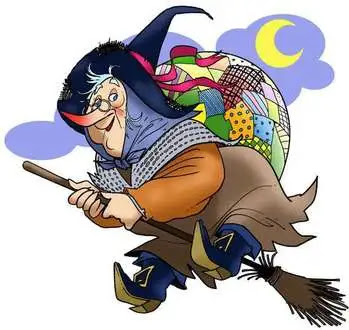
In Italy, this is the day of the "good witch" - La Bafana. The legend of this iconic Christmas visitor has lived on through the centuries. 

According to this legend, La Befana was a woman who lived during the time of Jesus Christ. She was a very old woman who loved to clean. One day The Three Wise Men arrived at her doorstep. She invited them in and fed them. As they were leaving they asked the old woman if she would accompany them on their journey to see baby Jesus. La Befana refused. She had too much cleaning to do.

After The Three Wise Men left, she had a change of heart. She went after them in hopes to see the new king that was born in Bethlehem. She got lost and never found him. To this day, she has never given up the search for baby Jesus. Every year on the eve of the Epiphany, she travels on her broom in search of Jesus Christ, dropping off gifts to children along the way.

Some Italian children believe that La Befana is the wife of Santa Claus. She lives in the South Pole while Santa works with the elves in the North Pole. She is an elderly woman who has a crooked nose. Her clothes are patched and her shoes are worn out. Some believe her hair is white, others imagine her hair black. She is also covered in soot because she enters the houses through the chimney.Italian children hang their stockings up and leave out food and wine for La Befana. She comes in though the chinmey. Good little children get candy and toys. Bad children get lumps of coal, onions, soot or garlic. Before leaving she uses her broom to sweep up and clean the home.

Saturday, December 24, 2022

Christmas In Italy: Wondrous, Indeed!


On Christmas Eve in Italy, Christmas trees are decorated, but the focal point of decoration is the Nativity scene. Italian nativity scenes are noted for their exquisite detail and elaborateness. Indeed, Italians take great pride in the creation of the manger, which was thought up in 1223 by St. Francis of Assisi, who wanted to involve the peasants in celebrating the life of Jesus. The Metropolitan Museum of Art in New York City possesses a presepio from Naples that contains figurines carved from wood and dressed in garments of satin, along with 30 gold-trimmed angels of the Magi, all framed by majestic columns.

Interestingly enough, bagpipes are the most common Italian Christmas sound. The zampognari, the shepherds who play the bagpipes, come down from their mountain homes at Christmas time and perform in the market squares. The playing of bagpipes is popular in the regions of Calabria and Abruzzo, and in the piazzas of Rome.

The melodies played are adapted from old hill tunes. Modern zampognari wear the traditional outfits of sheepskin vests, leather breeches, and a woolen cloak. 
The tradition of bagpipes goes back to ancient Roman times. Legend says that the shepherds entertained the Virgin Mary in Bethlehem.
On Christmas, the zampognari perform their own private pilgrimage, stopping before every shrine to the Madonna and every Nativity scene.

Children in Italy believe in a female version of Santa Claus called La Befana, an old woman who flies on a broom and brings presents. 
According to Italian legend, Three Wise Men asked La Befana for directions to Bethlehem. La Befana was asked to join them but declined three times. It took an unusually bright light and a band of angels to convince La Befana that she must join the Wise Men, but she was too late. 
She never found the Christ child and has been searching ever since.

On January 6, the Feast of Epiphany, La Befana goes out on her broom to drop off stockings filled with treats to all the sleeping children of Italy.
Just as children in America leave milk and cookies for jolly Santa Claus, La Befana collects messages and refreshments throughout the night.

Christmas in Italy is truly wondrous and is celebrated with great fanfare and typical Italian demonstrativeness and great spirit. 

Buon Natale e tutti!

Friday, December 23, 2022

The Seven Fishes? Here's What It's All About


People always ask me about the Italian Feast of the Seven Fishes served on Christmas Eve. In fact, the idea of the seven fishes has now become sort of legendary.

And so strong is this tradition, that I can honestly say that in my lifetime (and we're talking many decades) I've never spent a Christmas Eve without a variety of fish dishes spread before me. This is a hallowed custom that is passed from one generation to another. Where and how did it start? I've heard all kinds of stories trying to explain it but I'm not sure anyone really knows definitively. But I do think it's rooted in the Italian-American immigrant experience. It's something that Italian-Americans kept and expanded upon over the years And, as they prospered, it came to be more elaborate.To begin with you must have at least seven fish selections on the table.

Why seven?

Well, seven is a very important number. It stands for the seven sacraments of the Catholic Church and the seven days of creation. In Biblical numerology, seven is a number of perfection.

And fish is the featured dish because Italians have customarily abstained from eating meat on Christmas Eve. In fact, I do believe that for a long time the Catholic church prohibited the eating of meat the day before Christmas, This is the Christmas vigil. For my part, I still observe the "no meat on Christmas Eve" rule. I now do it in memory of my father who strictly followed this rule.

There is no set menu for this feast.
But here are some of the fishes that are traditionally used: calamari (squid); scungilli [skuhn-JEE-lee] (conch); baccala [bah-kah-LAH] (dry, salt cod); shrimp; clams (usually served with pasta); mussels, snapper, trout, tuna or salmon. I remember my father cleaning and preparing the various fishes (especially the baccala, calamari, smelts and scungilli for hours.
We have adapted this menu over the years and updated it somewhat.

So, our annual feast usually includes calamari, baccala, shrimp, crab, tuna, smelts and salmon. The cod and shrimp are served in both cold and fried (or sautéed) varieties. Shrimp is served as a shrimp cocktail and as shrimp scampi. Crab is served as both breaded and fried crab balls and fresh, cold crab claws. The baccala is served fried and in a salad. The calamari is served baked and stuffed. The tuna is served with spaghetti in a red sauce. The smelts are fried and the salmon is broiled. In addition to all of this, it is customary to serve fried cauliflower and Italian bitter greens, commonly known as e verdes. 

Our feast is usually preceded by cocktails (that's where the cold shrimp and crab come in) with much chatter and anticipation.

The Feast of the Seven Fishes takes up the entire evening -- usually beginning with the preliminaries at around 5 or 6 PM and often continuing into the wee hours of the morning. The bountiful array of food remains on the table for everyone to enjoy. Any guests who happen to arrive are also welcome to partake.

When he was alive, my father always prepared the bulk of the meal. He was an outstanding cook and accomplished "foodie" before there was such a term. His recipes were all in his head and the dishes were passed down from his mother and her family. My mother, however, always insisted on preparing the crab balls. That was her special forté. My father loved a household full of relatives, friends and neighbors enjoying his culinary creations all night long. The busier and the louder it got, the more he liked it.

After my father passed on, my sister and brother-in-law took over the tradition and kept much of it intact while adding a few updates including shrimp scampi, cold crab claws, salmon and shrimp cocktail. Now that they are gone, the meal has largely become the domain of my niece and nephew along with their family and friends. Thank goodness, they are insistent on continuing this grand tradition -- something that goes all the way back to my grandparents and probably even beyond that. We're talking about 100 years here, folks!

Desserts are not a mainstay of the feast. In fact, they are more of an afterthought. But, as more American elements have been introduced over the years, they have taken on their own prominence.
So, desserts now include an assortment of rich cakes, pies and cookies as well as cannoli and espresso.
Our feast is somewhat more casual than it was in years past but fine china, linens and glassware are still used on the table and when I say "casual" I mean business casual. So, this is definitely not a night for jeans or sweat suits or any kind of lounge or athletic gear. It's a night to look your best and add some glittery baubles to the jingle bells.

And since it's Italian, it's an evening of high drama. All emotions (and generations) are at play. So, it's grand opera one minute, a Broadway musical the next and then lots of rap, in no particular order. At any given moment several family members are competing for attention. The whole thing can become raucous but there are also quiet and reflective moments as these dishes and this event evoke powerful memories that bring emotions to the surface. While it helps to have your wits about you as conversation ebbs and flows, there are also moments of pathos.

To survive the evening, you need to pace yourself.
It's fine (and expected) to eat more than you usually would -- even much more. But you must take your time. That's the Italian Way -- to savor every moment and engaging all your senses. 
It's best to taste a bit of everything, moving through the huge menu in a careful, measured manner. My favorites are the crab cakes, shrimp and tuna pasta. So, I have to be careful not to eat so much of those dishes lest I not have room for anything else. If you do not partake of a bit of everything you're liable to offend your host.

Like I said, for Italian families this ritual feast is sacrosanct and intense feeling abounds. Why? Because the meaning of the evening is all wrapped up with loved ones (including those who have passed on) and our most cherished values. Consequently, one must drink in moderation. In fact, if you feel an urge to lift your glass frequently make sure you're lifting a glass of water.
With all the fish on the table, you will need it.

BTW: For Italians, Christmas Day is not as much of a Big Deal as Christmas Eve. On Christmas Day lasagna and chicken cutlets are more than enough. That's what we call decompressing. 

Enjoy these photos from one of our recent feasts:

Cold shrimp.

Crab balls.

The spaghetti with tuna in red sauce.

The bitter Italian greens.

Salmon.

Smelts, crab and fried cauliflower.

Cod and fried cauliflower.


Chocolates, miniature cupcakes, cookies, key lime pie and the tree. 

Sunday, April 17, 2022

Proclaim Buona Pasqua To All -- HAPPY EASTER!


Buona Pasqua, the beautiful Italian Easter greeting proclaims "Happy Easter" to all.

May your day be filled with peace, joy, la famiglia and the blessings of this season of renewal and rejoicing.

This is a day to proclaim salvation and to give thanks for our faith; regaling in the hope of eternal life, the promise of the Trinity.

In Italy, Easter remains a day that celebrates life. And no group of people celebrates life as well as the Italians.

Although Italians do not decorate hard–boiled eggs nor have chocolate bunnies or pastel marshmallow chicks, the biggest Easter displays in bars, pastry shops, supermarkets, and especially at chocolatiers are brightly wrapped uova di Pasqua—chocolate Easter eggs—in sizes that range from 10 grams (1/3 ounce) to 8 kilos (nearly 18 pounds). 

Most of them are made of milk chocolate in a mid–range, 10–ounce size by industrial chocolate makers.

Some producers distinguish between their chocolate eggs for children (sales numbers are a closely guarded secret, but the market for these standard quality eggs is said to be shrinking with Italy's birthrate) and expensive "adult" versions. All except the tiniest eggs contain a surprise. Grown–ups often find their eggs contain little silver picture frames or gold–dipped costume jewelry.

The very best eggs are handmade by artisans of chocolate, who offer the service of inserting a surprise supplied by the purchaser. Car keys, engagement rings, and watches are some of the high–end gifts that have been tucked into Italian chocolate eggs in Italy.

Our favorite Easter treats: chocolate coconut cream eggs (sinfully sweet), chocolate covered marshmallows, jelly beans of every color and flavor, sweet Italian Easter bread, hot cross buns and Peeps. Well, they used to be out favorite easter treats but since we went low carb they are consumed in moderation if at all. Oh, well . . . . 

Saturday, January 1, 2022

Just Another Reason To LOVE The Italians!


God bless the Italians. 
They despise rigidityy, conformity and subservience. 
And they steadfastly refused to be governed. Hooray!

Thursday, December 23, 2021

Christmas In Italy: Miraculous And Truly Wondrous!

On Christmas Eve in Italy, Christmas trees are decorated, but the focal point of decoration is the Nativity scene. Italian nativity scenes are noted for their exquisite detail and elaborateness. Indeed, Italians take great pride in the creation of the manger, which was thought up in 1223 by St. Francis of Assisi, who wanted to involve the peasants in celebrating the life of Jesus. The Metropolitan Museum of Art in New York City possesses a presepio from Naples that contains figurines carved from wood and dressed in garments of satin, along with 30 gold-trimmed angels of the Magi, all framed by majestic columns.

Interestingly enough, bagpipes are the most common Italian Christmas sound. The zampognari, the shepherds who play the bagpipes, come down from their mountain homes at Christmas time and perform in the market squares. The playing of bagpipes is popular in the regions of Calabria and Abruzzo, and in the piazzas of Rome.

The melodies played are adapted from old hill tunes. Modern zampognari wear the traditional outfits of sheepskin vests, leather breeches, and a woolen cloak. 
The tradition of bagpipes goes back to ancient Roman times. Legend says that the shepherds entertained the Virgin Mary in Bethlehem.
On Christmas, the zampognari perform their own private pilgrimage, stopping before every shrine to the Madonna and every Nativity scene.

Children in Italy believe in a female version of Santa Claus called La Befana, an old woman who flies on a broom and brings presents. 
According to Italian legend, Three Wise Men asked La Befana for directions to Bethlehem. La Befana was asked to join them but declined three times. It took an unusually bright light and a band of angels to convince La Befana that she must join the Wise Men, but she was too late. 
She never found the Christ child and has been searching ever since.

On January 6, the Feast of Epiphany, La Befana goes out on her broom to drop off stockings filled with treats to all the sleeping children of Italy.
Just as children in America leave milk and cookies for jolly Santa Claus, La Befana collects messages and refreshments throughout the night.

Christmas in Italy is truly wondrous and is celebrated with great fanfare and typical Italian demonstrativeness and great spirit. 

Thursday, October 28, 2021

Italian American Heritage Month: Mother Cabrini

Mother Cabrini (Frances Cabrini)  

The youngest of thirteen children, Frances Cabrini was born on July 15, 1850 in a small village called S’ant Angelo Lodigiano near the city of Milan, Italy. She grew up enthralled by the stories of missionaries and made up her mind to join a religious order. Because of her frail health, she was not permitted to join the Daughters of the Sacred Heart who had been her teachers and under whose guidance she obtained her teaching certificate.

However, in 1880, with seven young women, Frances founded the Institute of the Missionary Sisters of the Sacred Heart of Jesus. She was as resourceful as she was prayerful, finding people who would donate what she needed in money, time, labor and support. She and her sisters wanted to be missionaries in China; she visited Rome to obtain an audience with Pope Leo XIII. The Pope told Frances to go “not to the East, but to the West” to New York rather than to China as she had expected. She was to help the thousands of Italian immigrants already in the United States. And this is how Frances became an inimitable part of the story of our own country.

In 1889, New York seemed to be filled with chaos and poverty, and into this new world stepped Mother Frances Cabrini and her sister companions. Cabrini organized catechism and education classes for the Italian immigrants and provided for the needs of the many orphans. She established schools and orphanages despite tremendous odds.

Soon, requests for her to open schools came to Frances Cabrini from all over the world. She traveled to Europe, Central and South America and throughout the United States. She made 23 trans-Atlantic crossings and established 67 institutions: schools, hospitals and orphanages.

Her activity was relentless until her death. On December 22, 1917, in Chicago, she died. In 1946, she was canonized a saint by Pope Pius XII in recognition of her holiness and service to mankind and was named Patroness of Immigrants in 1950.

Today the Missionary Sisters, their lay collaborators and volunteers work as teachers, nurses, social workers, administrators and members of institutional boards of trustees. They can be found on six continents and 17 countries throughout the world – wherever there is a need.

H/T: Missionary Sisters of the Sacred Heart

Part of a month long series spotlighting a different accomplished Italian American every day during Italian American Heritage Month.

Sunday, October 10, 2021

Stereotypes? Oh, Yeah -- We've Got Plenty Of 'Em!

My friend Christine Flowers and I have a bit of a disagreement about the endurance and the impact of clichés and stereotypes surrounding Italian Americans. Now, Christine has decided that we'd present our views in her column in today's Delaware County Daily Times. Here's an excerpt from the column. Christine goes first:

My Italian heritage is a mammoth part of my identity.  You wouldn’t know it from my last name, but I descend from a long line of men and women who have vowels at the end of their own.  They painted frescoes on the ceiling of St. Peter, taught the world that the Earth revolved around the Sun, were experimenting with flight centuries before the Wright brothers, turned the last gasps of breath of doomed Violetta into heartbreaking music, walked us through the Valley of Death, up the steps of Purgatory and through the gates of Heaven, and fed us the only food that fills the soul, beyond satisfying the stomach.

My Irish-French-Swedish (but mostly Irish) father had no problem with my indoctrination in “Italianita`” because he himself had been enchanted by his wife, a Sophia Loren lookalike who brought as her wedding dowry the civilization of emperors, aqueducts, orators and myth.  If anything, Irish Teddy was even more Italian than my mother, often joking in an off-color way that he was “Italian by injection.”  And it’s no coincidence that his hero, Cicero, shared his birthday: January 3rd.

I write all of this not as an excuse for what follows, but as my certificate of authenticity, presented to you so that you will know my allegiance.  My pride comes from a source so deep and inexhaustible that I have taken any affront to this heritage as a personal attack.  The people who tried to have the statue of Columbus torn down from its place of honor in South Philadelphia’s Marconi Square were assaulting me, trying to steal from me my birthright, insulting my intelligence and crushing me under the weight of their ignorance and bigotry.  It was personal, and that is why I despise them, along with the mayor who supported them.  Don’t dare . . . To read the rest of the column click here.